
Kitchen extraction
Extract Fan Cleaning across the UK
Fan casing and impeller degreased to restore airflow and reduce fire and failure risk.
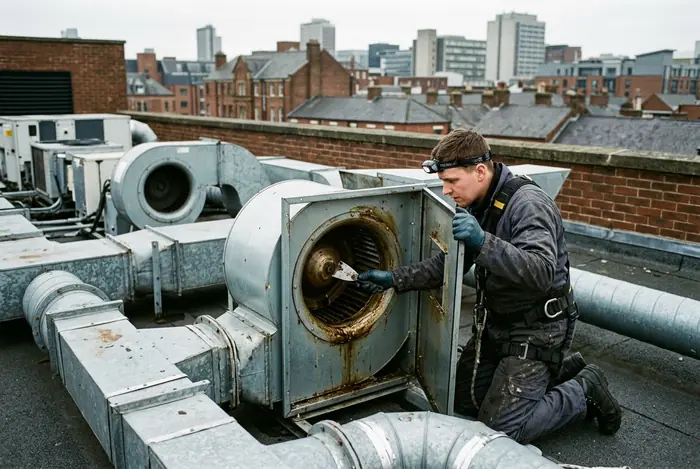
What is extract fan cleaning?
Extract fan cleaning removes the grease that collects on the fan impeller and inside the casing. A greasy fan runs out of balance, loses airflow and can drip grease onto roofs and walls. We isolate the fan, open the casing, clean the impeller and housing, and check it runs freely afterwards.
Fans are often on roofs or in plant rooms that nobody visits. They are also the last point grease reaches before it leaves the building, so a dirty fan is a sign the rest of the system needs attention.
What's included
- Safe isolation before work starts
- Casing opened and impeller cleaned
- Fan housing and discharge cowl degreased
- Drain points and drip trays cleared
- Belt and bearing condition noted on the report
- Run check after reassembly
Guide price
Usually £150 to £350 per fan as part of a system clean, depending on type and roof access. Every job is quoted in writing after a survey.
| Cooking hours per day | Usage | Clean at least every |
|---|---|---|
| 12 to 16 hours | Heavy | 3 months |
| 6 to 12 hours | Moderate | 6 months |
| 2 to 6 hours | Light | 12 months |
What happens next?
- 1
Survey
We look at your canopy, trace the duct route to the fan and note access, then send a fixed written quote.
- 2
Book
We agree a date around your service, usually overnight or a closed day, and send the method statement.
- 3
Clean
Equipment is sheeted, the system is tested, cleaned from canopy to fan and tested again.
- 4
Report
Within days you get the TR19® Grease report and certificate, with your next clean date.
Questions we're often asked
Do you clean roof-mounted fans?
Yes, with suitable roof access and edge protection. Let us know about roof access arrangements when you book.
Can a dirty fan affect the kitchen?
Yes. Grease on the impeller reduces airflow, so the canopy pulls less smoke and steam out of the kitchen.
Will you repair the fan?
We report any faults we find, such as worn belts or noisy bearings, so your mechanical contractor can repair them.