
Testing & compliance
TR19® Grease Inspection & Testing across the UK
Risk assessment, deposit thickness testing and a written report on when your system needs cleaning.
What is TR19® Grease inspection & testing?
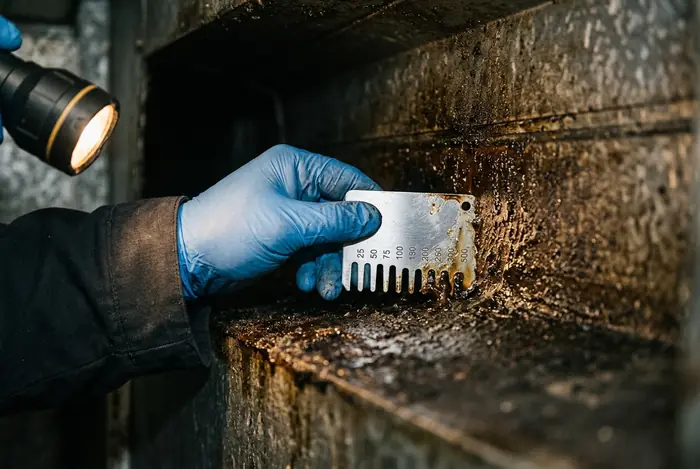
A TR19® Grease inspection tells you how much grease is in your extract system and when it needs cleaning. We survey the route from canopy to fan, take deposit thickness tests with a wet film gauge, photograph the findings and set a cleaning interval based on your cooking hours.
Cleaning to a calendar alone can mean cleaning too late on a busy fryer line or too often on a light-use kitchen. Measured deposits give you and your insurer evidence for the interval you choose.
What's included
- System survey and schematic drawing
- Deposit thickness tests at set points
- Fire risk notes on access, dampers and fans
- Recommended cleaning interval by cooking hours
- Photos of each test position
- Written report suitable for insurers and landlords
Guide price
Typically £150 to £350 per system, credited against a clean booked within 30 days. Every job is quoted in writing after a survey.
What happens next?
- 1
Survey
We look at your canopy, trace the duct route to the fan and note access, then send a fixed written quote.
- 2
Book
We agree a date around your service, usually overnight or a closed day, and send the method statement.
- 3
Clean
Equipment is sheeted, the system is tested, cleaned from canopy to fan and tested again.
- 4
Report
Within days you get the TR19® Grease report and certificate, with your next clean date.
Questions we're often asked
What is a deposit thickness test?
A deposit thickness test uses a wet film comb gauge pressed against the duct surface to measure the depth of grease in microns. TR19® Grease uses these readings to decide when cleaning is needed and to prove it was done.
Do I need an inspection before a clean?
Not always. Every full clean includes pre-clean and post-clean tests. A stand-alone inspection is useful for new tenants, buyers or when an insurer asks for a current condition report.
Who needs the report?
Your insurer, landlord, fire risk assessor or EHO may ask for it. Keep a copy with your fire risk assessment.