
Devon · EX postcodes
Extract Fan Cleaning in Exmouth
Book extract fan cleaning in Exmouth with a free survey, a fixed written quote and a TR19® Grease report at the end.
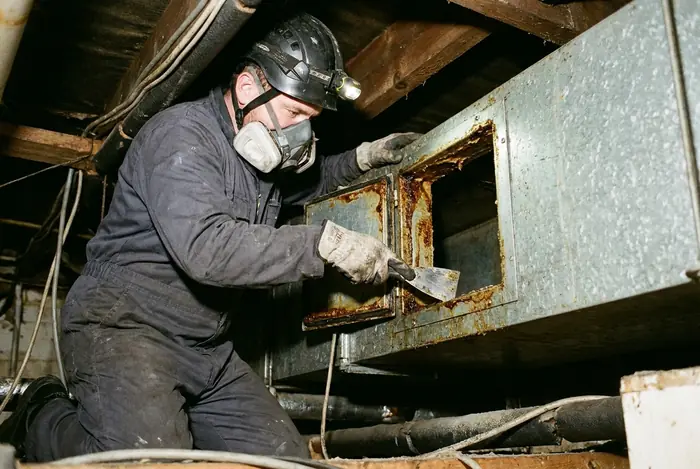
What does extract fan cleaning in Exmouth include?
Extract fan cleaning removes the grease that collects on the fan impeller and inside the casing. A greasy fan runs out of balance, loses airflow and can drip grease onto roofs and walls. We isolate the fan, open the casing, clean the impeller and housing, and check it runs freely afterwards.
Kitchens in Exmouth range from high-street takeaways to hotel, school and hospital kitchens. Each sits in a different TR19® Grease usage band, so we set the cleaning interval from your actual cooking hours rather than a blanket schedule.
Hotel and pub kitchens around Exmouth often have the longest duct routes, through upper floors and roof voids. We plan access for these before the clean day.
A typical visit follows a set order: protect, test, clean, test again, photograph. It means the report shows exactly what changed during the clean.
- Safe isolation before work starts
- Casing opened and impeller cleaned
- Fan housing and discharge cowl degreased
- Drain points and drip trays cleared
| Town | Exmouth, Devon |
|---|---|
| Postcode area | EX |
| Nearest covered town | Exeter (9 miles) |
| Guide price | Usually £150 to £350 per fan as part of a system clean, depending on type and roof access. |
From Exmouth we also cover Exeter (about 9 miles), Newton Abbot (11 miles) and Torquay (12 miles), all within Devon.
- Exeter about 9 miles
- Newton Abbot about 11 miles
- Torquay about 12 miles
- Paignton about 14 miles
- Totnes about 18 miles
- Tiverton about 20 miles
For Exmouth bookings, tell us your cooking hours and any insurer deadline and we will plan around both. More about extract fan cleaning.
Extract Fan Cleaning in Exmouth: questions
Do you cover Exmouth?
Yes. We provide extract fan cleaning in Exmouth and across EX postcodes, as well as nearby Exeter, Newton Abbot, Torquay.
Will you repair the fan?
We report any faults we find, such as worn belts or noisy bearings, so your mechanical contractor can repair them.