
Testing & compliance
TR19® Grease Inspection & Testing in County Durham
Risk assessment, deposit thickness testing and a written report on when your system needs cleaning.
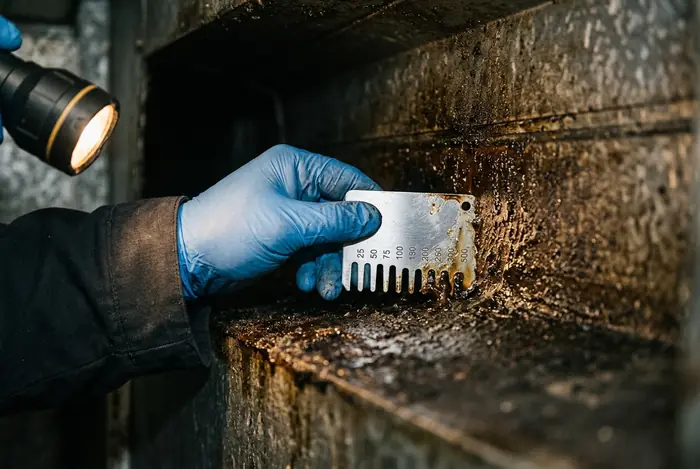
What is TR19® Grease inspection & testing in County Durham?
From single takeaway canopies to multi-site catering, we provide tr19® grease inspection & testing in County Durham and across North East.
A TR19® Grease inspection tells you how much grease is in your extract system and when it needs cleaning. We survey the route from canopy to fan, take deposit thickness tests with a wet film gauge, photograph the findings and set a cleaning interval based on your cooking hours.
Busy County Durham kitchens often run fryers and grills for long hours. That puts them in the heavy-use band, where grease builds quickly and cleaning every three months is the TR19® Grease minimum.
What's included
- System survey and schematic drawing
- Deposit thickness tests at set points
- Fire risk notes on access, dampers and fans
- Recommended cleaning interval by cooking hours
- Photos of each test position
- Written report suitable for insurers and landlords
Guide price
Typically £150 to £350 per system, credited against a clean booked within 30 days. Every job is quoted in writing after a survey.
| Area | County Durham, England |
|---|---|
| Region | North East |
| Postcode areas | DH, DL, SR, TS |
| Towns listed | 9 |
Towns we cover in County Durham
Nearby areas
Questions we're often asked
Do you provide tr19® grease inspection & testing across County Durham?
Yes. We cover County Durham including Durham, Darlington, Hartlepool, Stockton-on-Tees, Bishop Auckland, with cleans booked around your opening hours.
What is a deposit thickness test?
A deposit thickness test uses a wet film comb gauge pressed against the duct surface to measure the depth of grease in microns. TR19® Grease uses these readings to decide when cleaning is needed and to prove it was done.
Do I need an inspection before a clean?
Not always. Every full clean includes pre-clean and post-clean tests. A stand-alone inspection is useful for new tenants, buyers or when an insurer asks for a current condition report.