
Testing & compliance
TR19® Grease Inspection & Testing in Cumbria
Risk assessment, deposit thickness testing and a written report on when your system needs cleaning.
What is TR19® Grease inspection & testing in Cumbria?
Book tr19® grease inspection & testing in Cumbria with a free survey, a fixed written quote and a TR19® Grease report at the end.
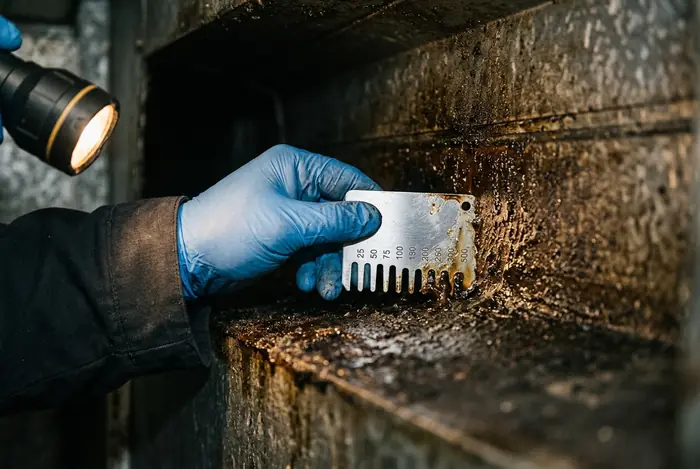
A TR19® Grease inspection tells you how much grease is in your extract system and when it needs cleaning. We survey the route from canopy to fan, take deposit thickness tests with a wet film gauge, photograph the findings and set a cleaning interval based on your cooking hours.
Landlords and managing agents in Cumbria often need evidence that a tenant's extract system is clean where it passes through shared parts of a building. We provide independent reports they can file.
What's included
- System survey and schematic drawing
- Deposit thickness tests at set points
- Fire risk notes on access, dampers and fans
- Recommended cleaning interval by cooking hours
- Photos of each test position
- Written report suitable for insurers and landlords
Guide price
Typically £150 to £350 per system, credited against a clean booked within 30 days. Every job is quoted in writing after a survey.
| Area | Cumbria, England |
|---|---|
| Region | North West |
| Postcode areas | CA, LA |
| Towns listed | 8 |
Towns we cover in Cumbria
Nearby areas
Questions we're often asked
Do you provide tr19® grease inspection & testing across Cumbria?
Yes. We cover Cumbria including Carlisle, Kendal, Barrow-in-Furness, Workington, Penrith, with cleans booked around your opening hours.
What is a deposit thickness test?
A deposit thickness test uses a wet film comb gauge pressed against the duct surface to measure the depth of grease in microns. TR19® Grease uses these readings to decide when cleaning is needed and to prove it was done.
Do I need an inspection before a clean?
Not always. Every full clean includes pre-clean and post-clean tests. A stand-alone inspection is useful for new tenants, buyers or when an insurer asks for a current condition report.